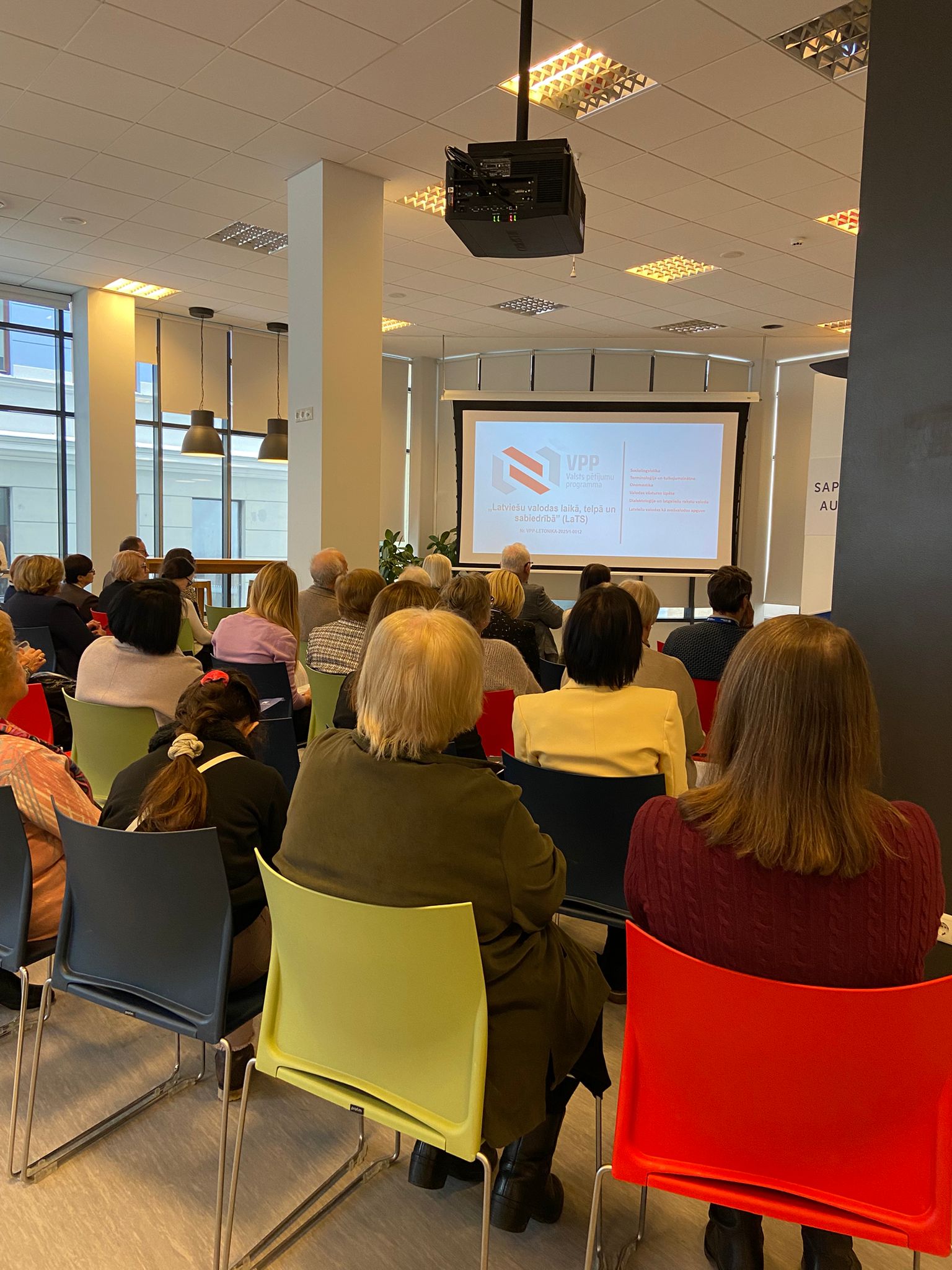
The goal of the project “The Latvian Language in Time, Space, and Society (LaTS)” (No. VPP-LETONIKA-2025/1-0012, project lead Sanda Rapa) is to strengthen and expand knowledge of Latvian as a dynamic system shaped by its historical development, regional and social diversity, functional variety, and multilingual environment in Latvia and beyond, while simultaneously developing Latvian as a cornerstone of national identity and state security. To achieve this goal, the Latvian language will be studied in six dimensions: sociolinguistics, terminology and translation studies, dialectology and the study of the Latgalian written language, onomastics, the history of the Latvian language, and language acquisition. The project consists of six interrelated sub-projects that together correspond to the research tasks defined in sub-paragraph 6.1.1 of the Cabinet Order No. 559 of 12 September 2025. All sub-projects will contribute to the horizontal objectives of the programme: the development of human capital through student involvement; the expansion of the knowledge base in linguistics and related disciplines through peer-reviewed publications and monographs; the improvement of digital resources and tools by enhancing open-access linguistic databases and corpora; contributions to education and language policy development; as well as the dissemination of research results and the provision of recommendations for policymakers
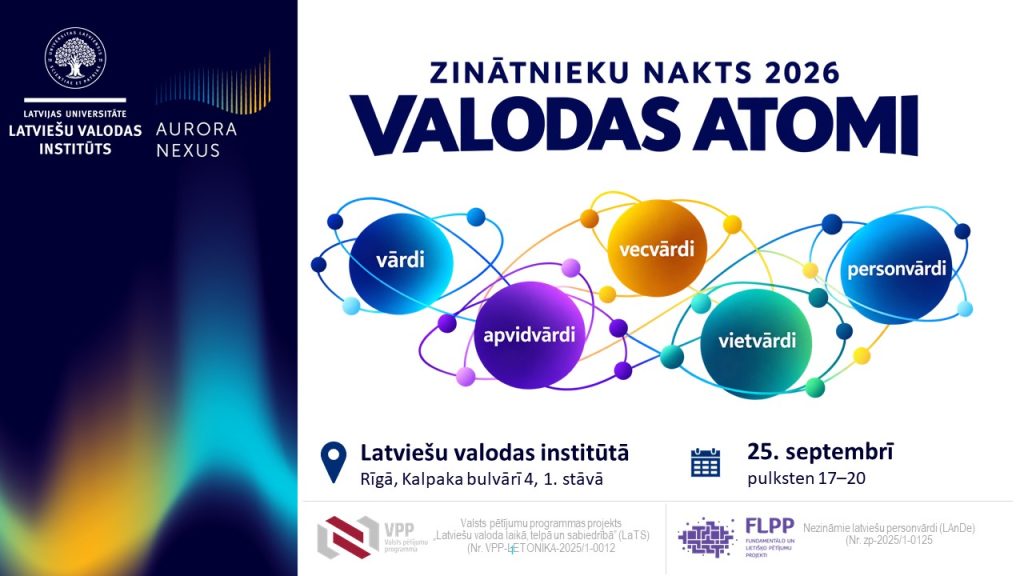
On 25 September 2026, participants of the State Research Programme project LaTS will welcome visitors to Researchers’ Night 2026 events in both Riga and Liepāja.
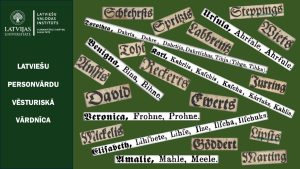
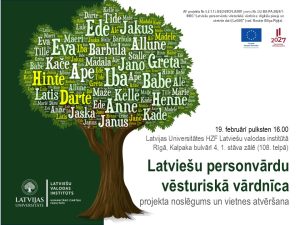
In Riga, the creative workshop “Atoms of Language” will invite visitors to explore the structure and diversity of language. Although language is not tangible matter, it has a structure of its own, consisting of interconnected units – words that can be thought of as atoms of language, preserving knowledge about our history, culture and perception of the world and, when combined, forming a shared body of knowledge and collective memory. Through interactive activities, visitors will be able to search for historical forms of contemporary personal names and find modern equivalents of historical words, practise reading texts printed in Fraktur, guess the meanings of dialect words, and explore how an electronic dictionary is created. Working together with linguists, visitors will discover the diversity of language and learn how words change over time, preserve traces of the past and continue to shape the Latvian language today.
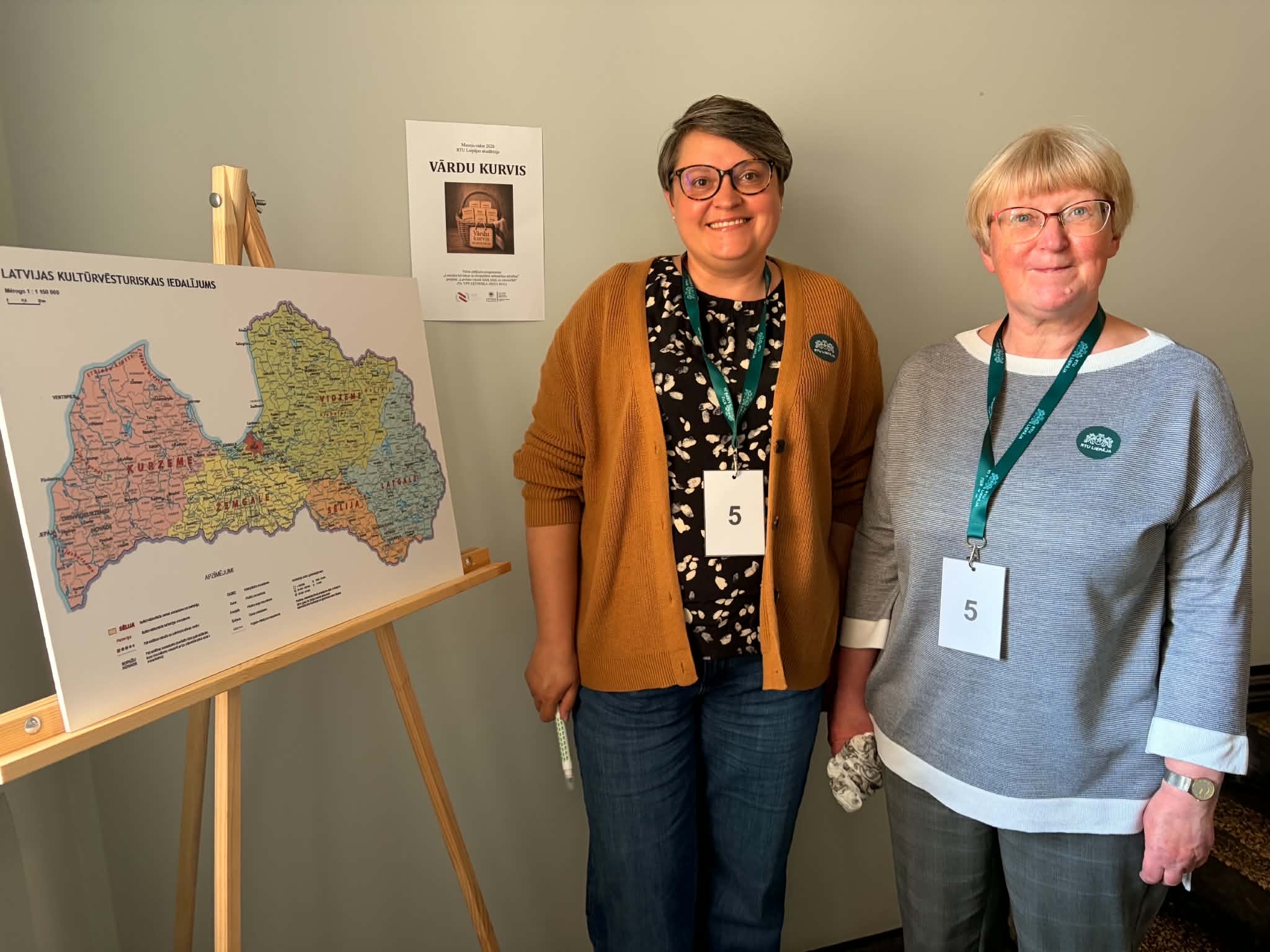
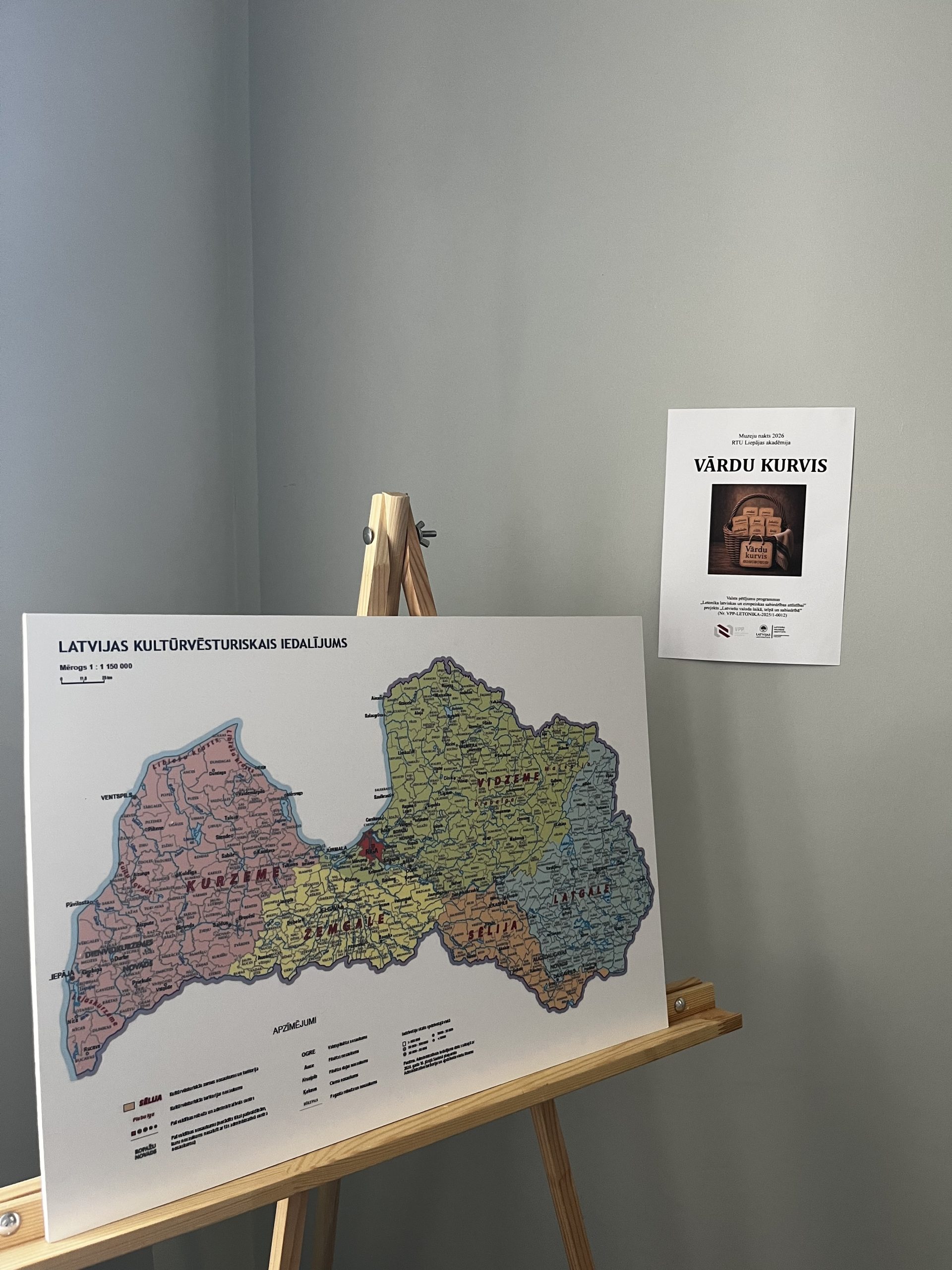
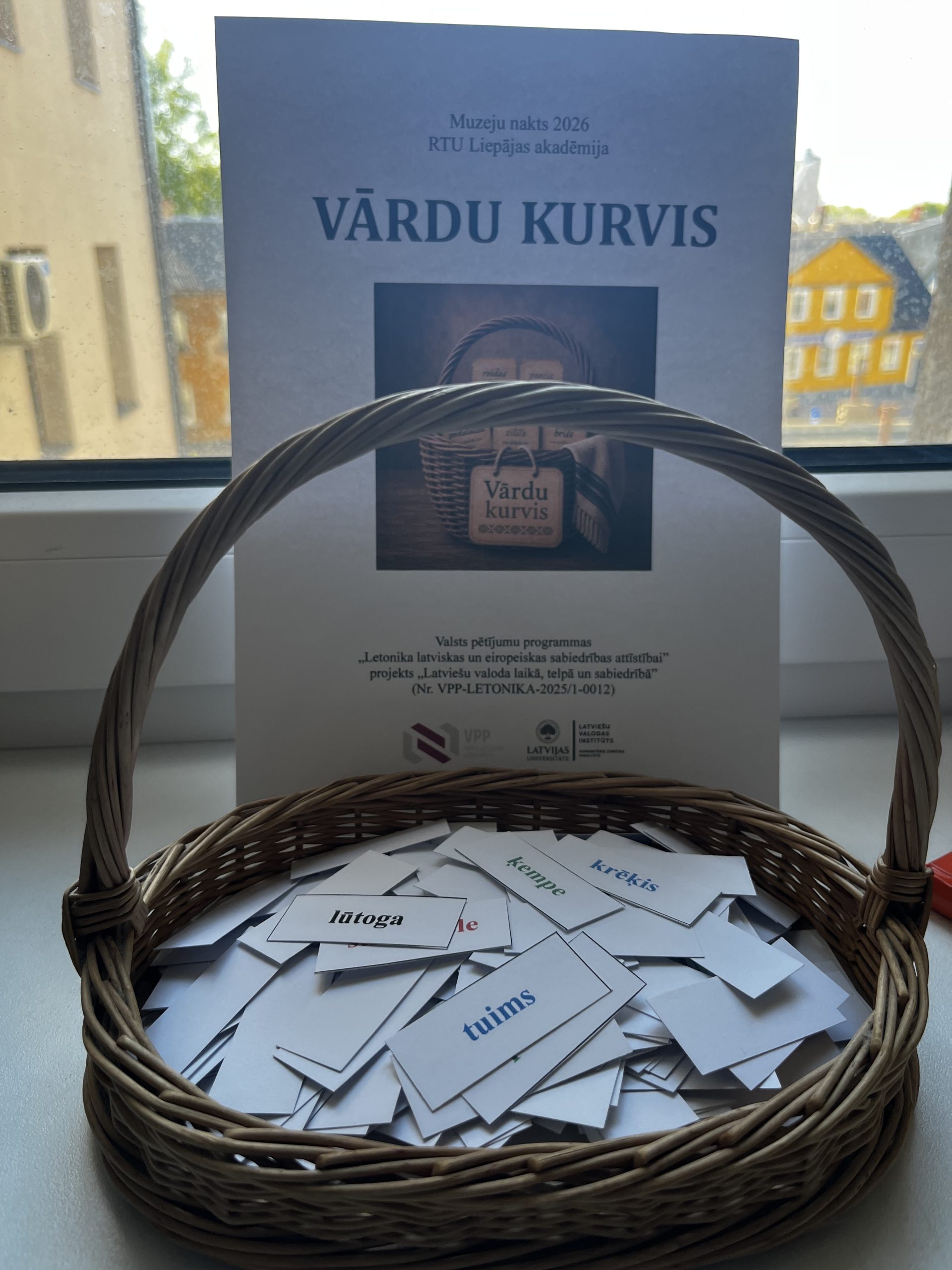
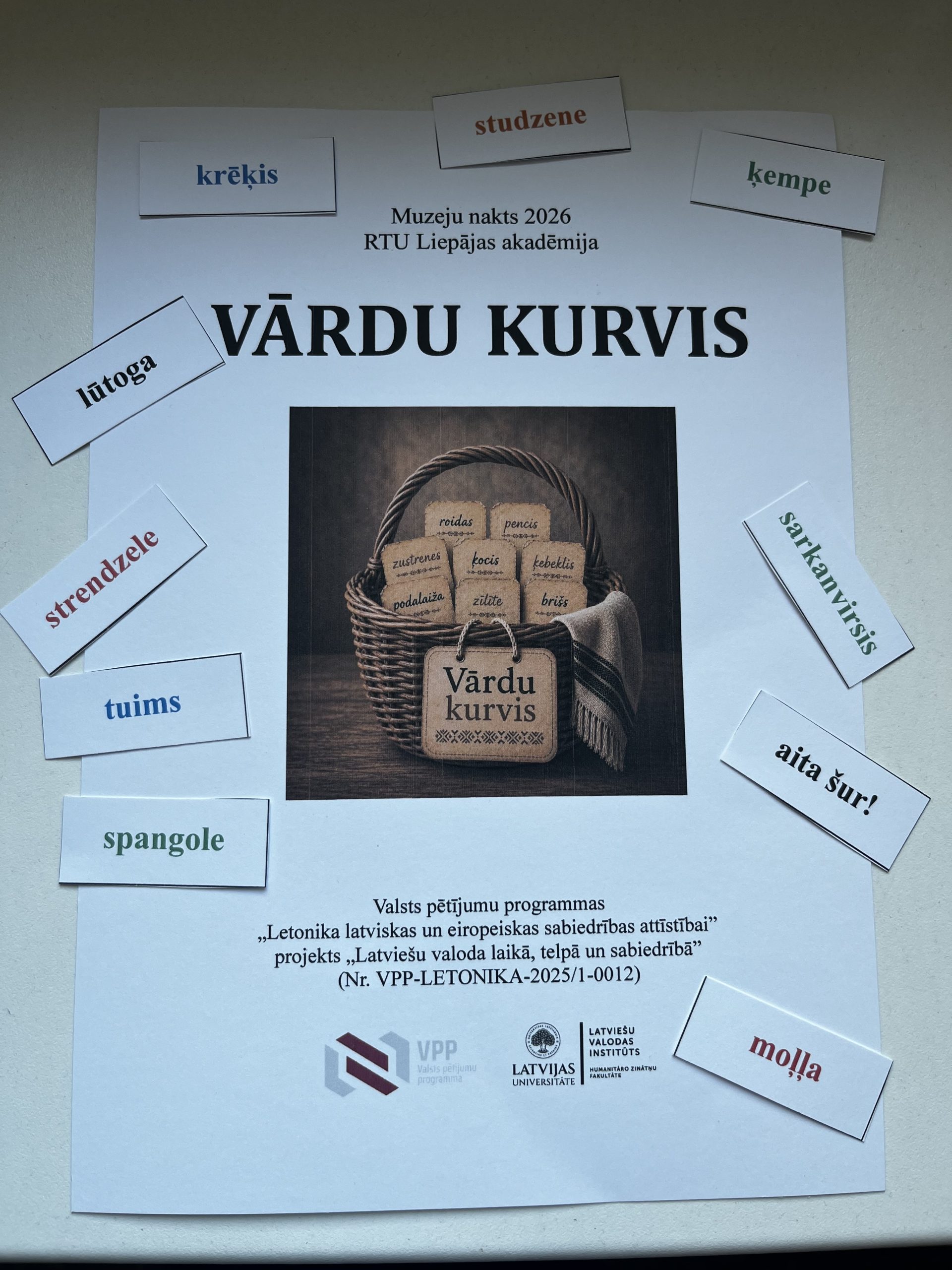
Meanwhile, RTU Liepāja will organise the workshop “Dialect Words and Semantic Research”, inviting visitors to explore the hidden layers of word meanings and discover what the local language reveals about regional identity and ways of thinking.
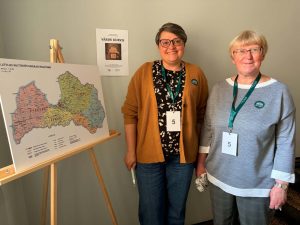
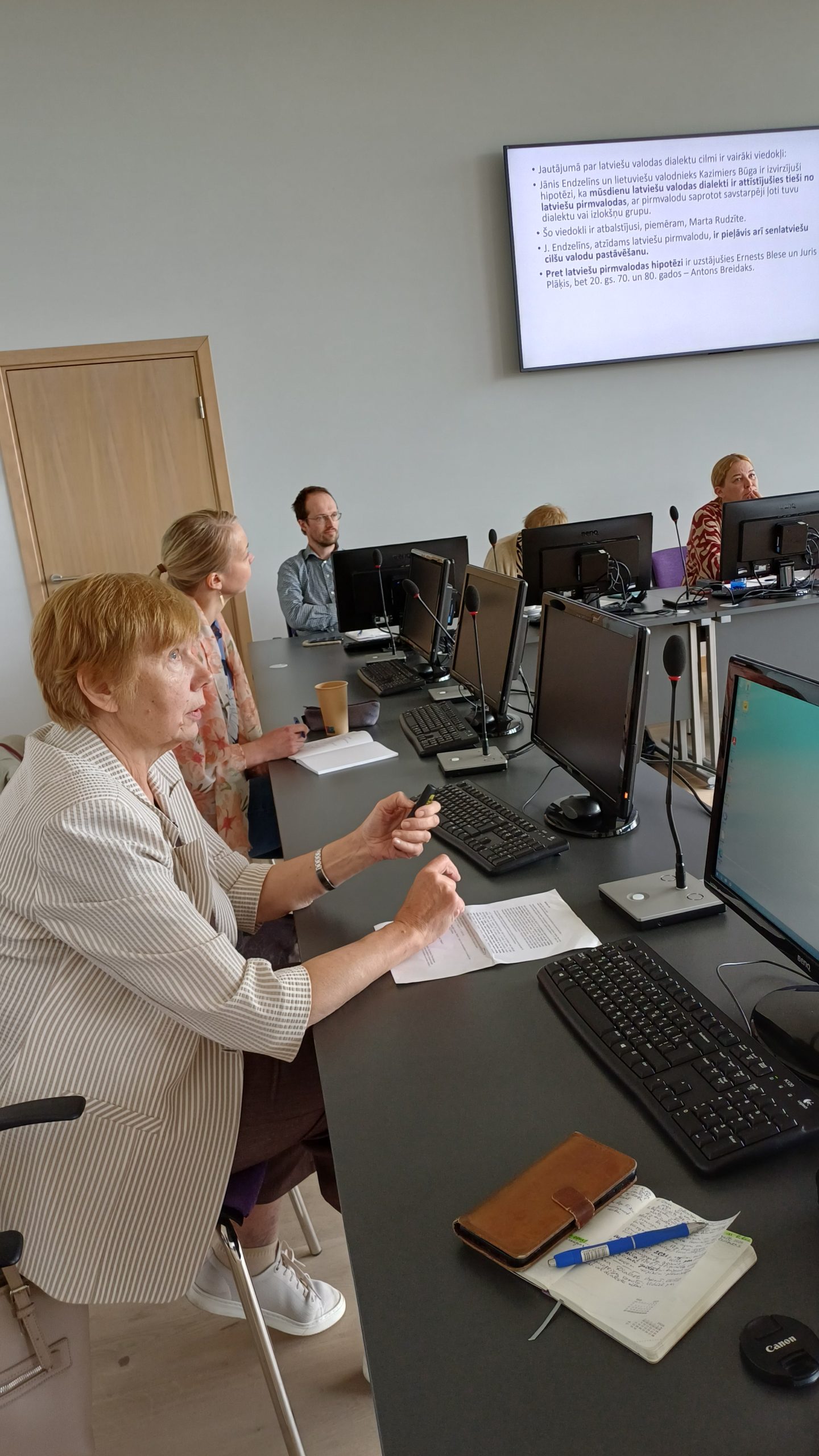
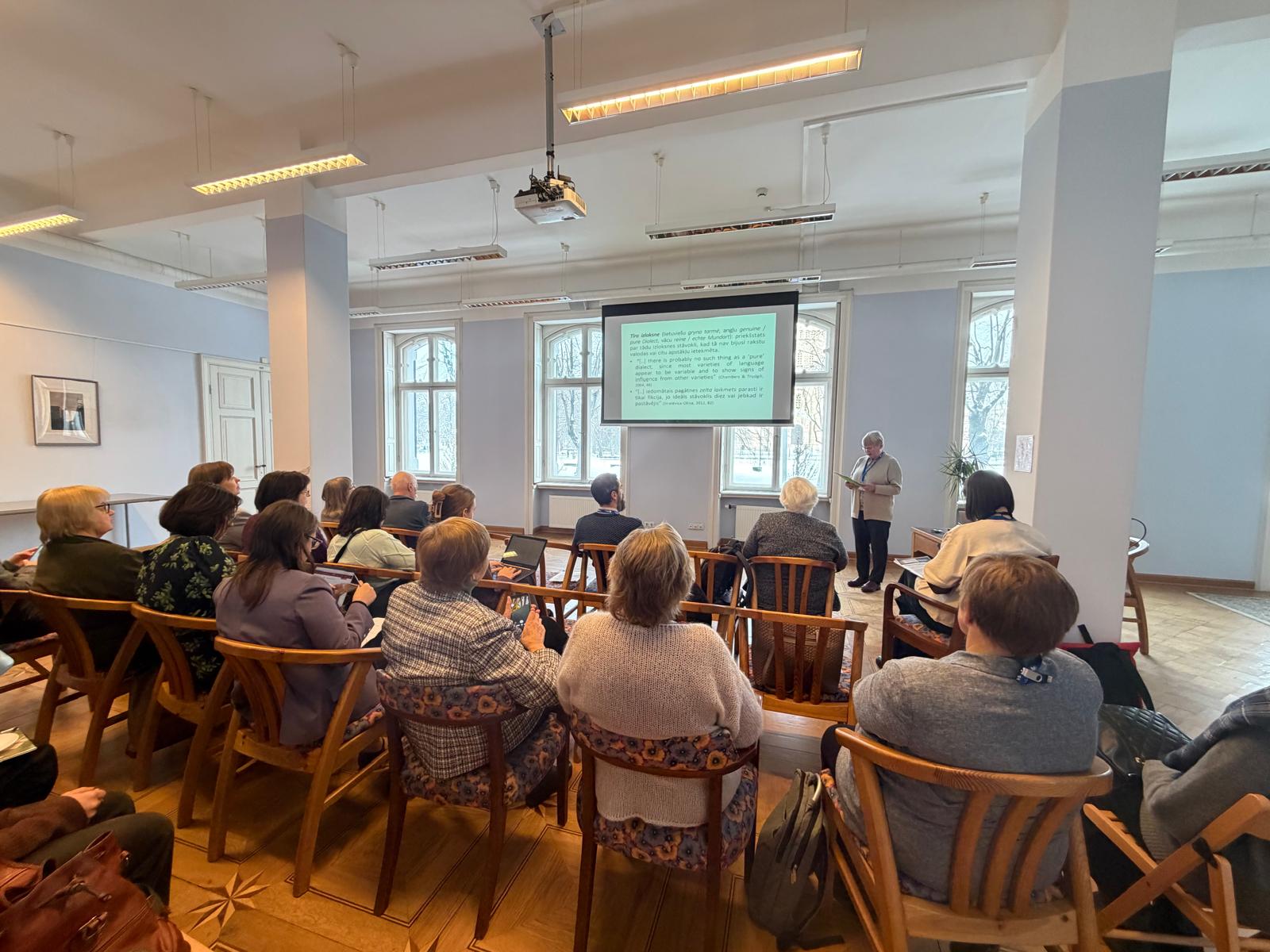
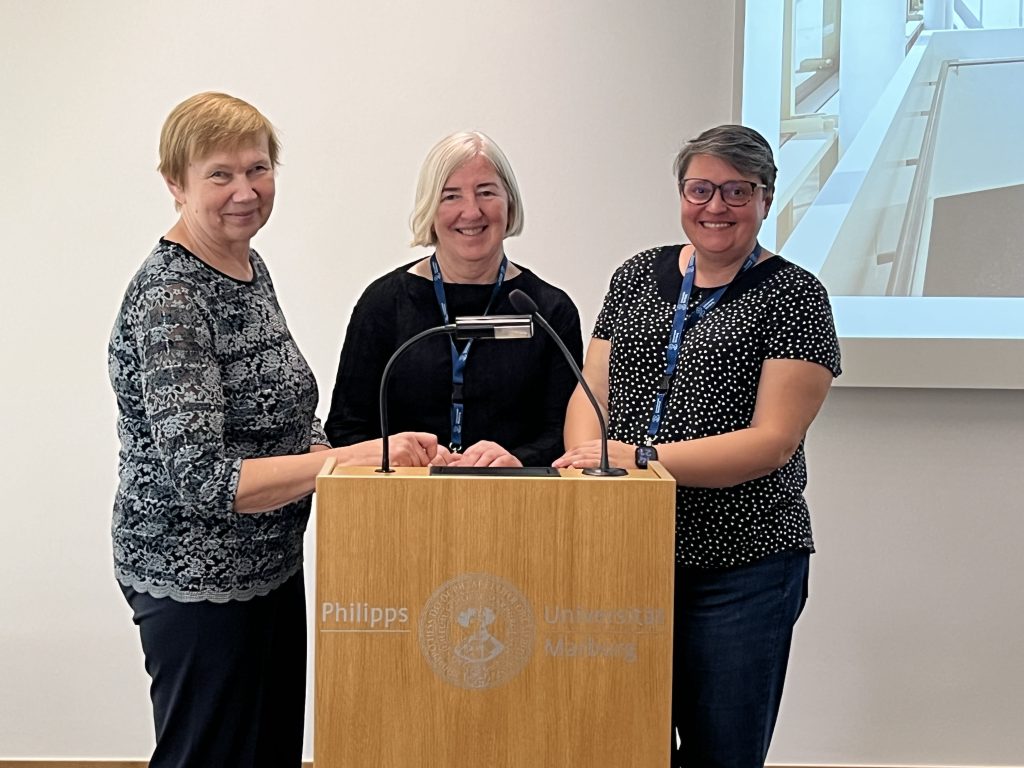
From 7 to 11 September 2026, leading researchers at the Institute of the Latvian Language, Faculty of Humanities, University of Latvia, Anna Stafecka and Liene Markus-Narvila, as well as researcher Regīna Kvašīte, participated in the 11th Congress of the International Society for Dialectology and Geolinguistics in Marburg, Germany. In her presentation “Dialect and the Standardised Language in Latgale,” Anna Stafecka analysed the dialect varieties of Latgale and the Latgalian written language, focusing on their interaction and development. Liene Markus-Narvila’s presentation “The Dialects of Lower Kurzeme through Time” examined the historical development and present-day situation of the dialects of Lower Kurzeme, as well as the possible emergence of a regiolect. Regina Kvašyte in presentation “Contemporary Dialect Lexicography in Lithuania and Latvia,” compared the traditions of dialect dictionaries in the two countries.
Read more about the congress and the researchers’ participation in the News section of the website.
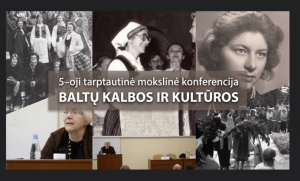
On 18–19 June 2026, Laimute Balode and Ilga Jansone, leading researchers at the Institute of Latvian Language, University of Latvia, participated in the 5th International Scientific Conference “Baltic Languages and Cultures”, organised by Klaipėda University. During the closing plenary session, they presented a paper on the types of variation in Latvian personal names from diachronic and synchronic perspectives, showcasing the project’s research on variation in Latvian anthroponymy. Read more about the conference and the researchers’ presentation in the News section of the Latvian Language Institute website.
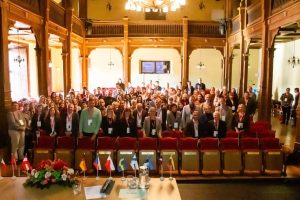
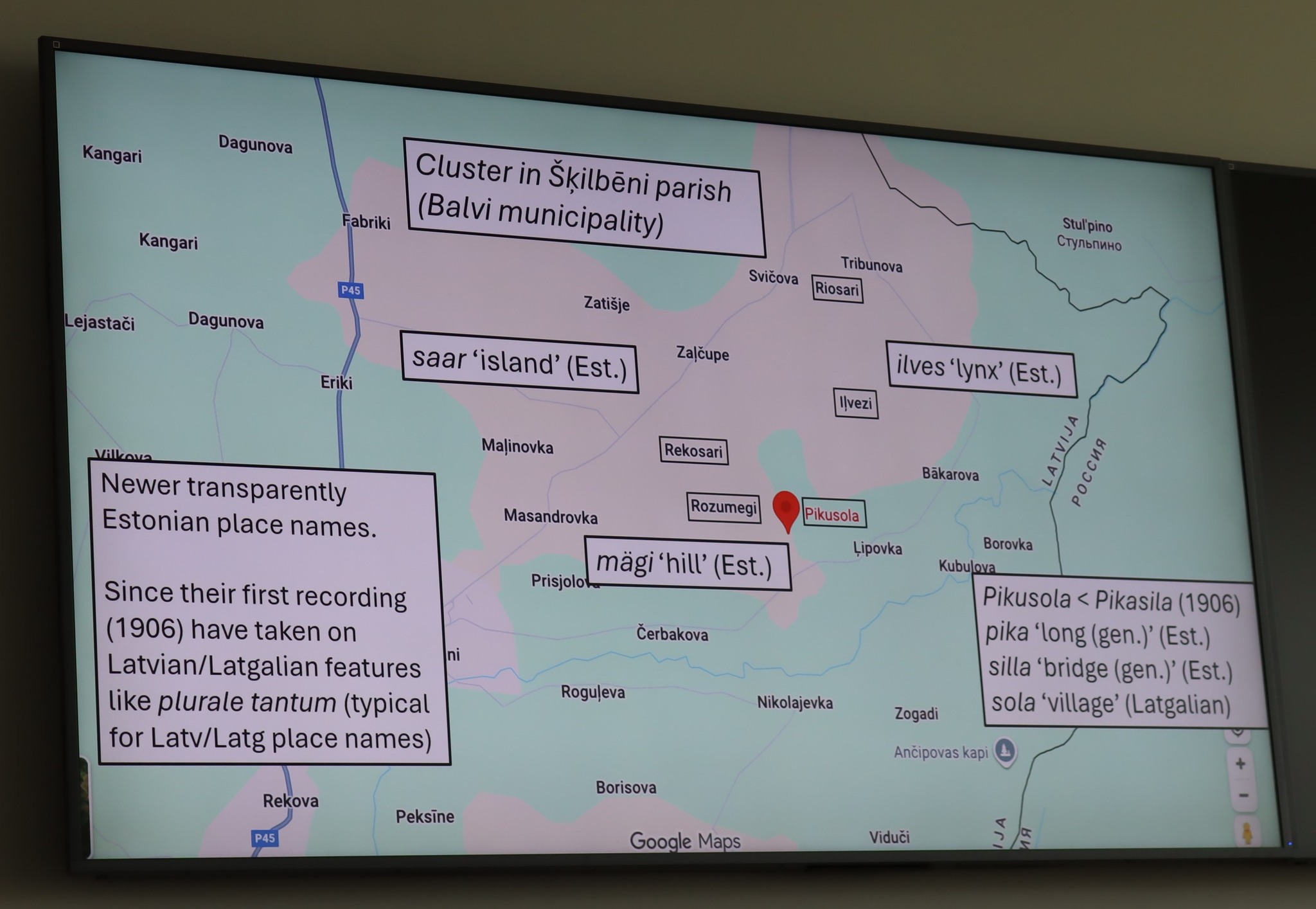
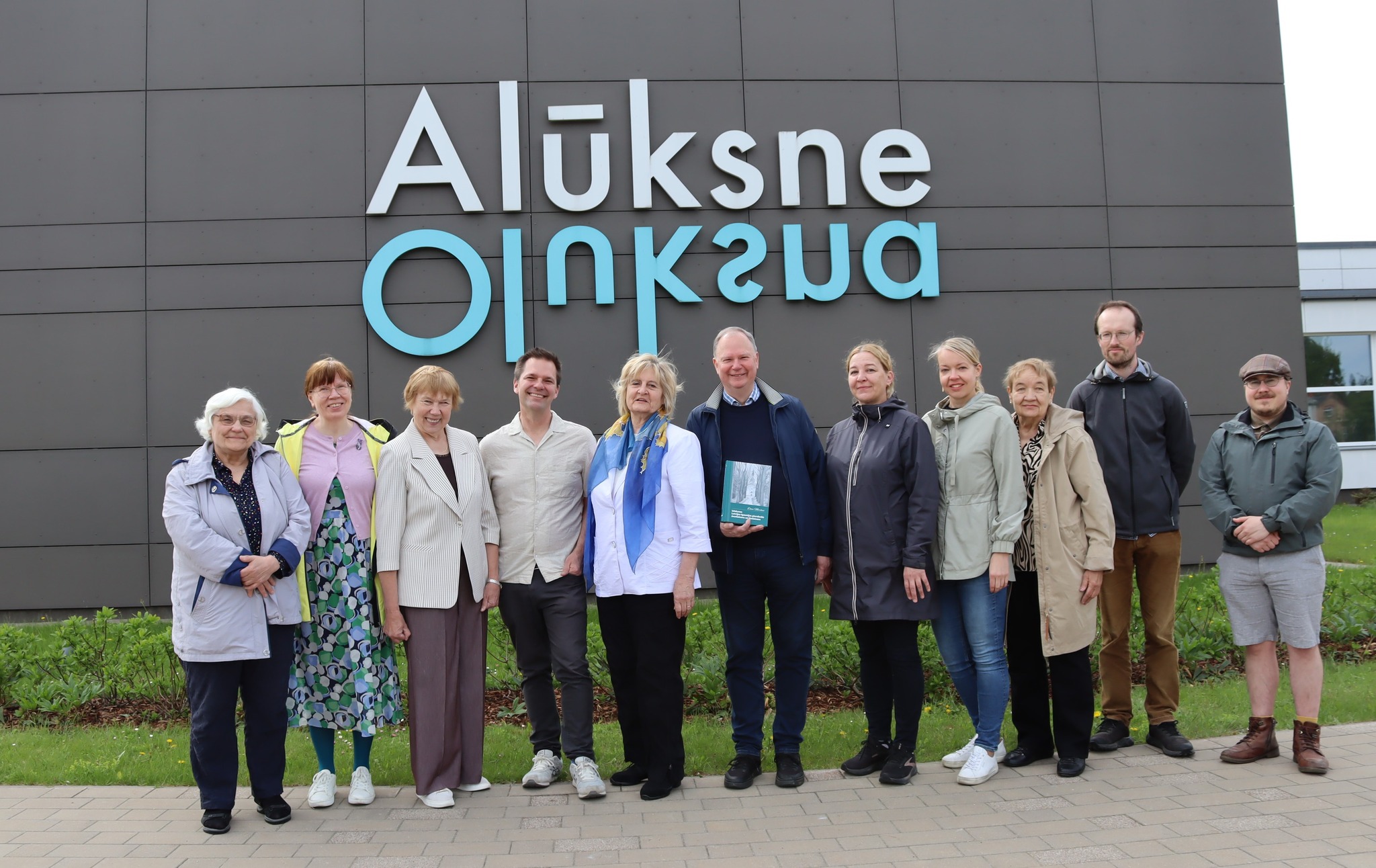
On 25 May 2026, linguists from Latvia and Estonia gathered in Alūksne for an international seminar on Latgalian, Malēnian, and South Estonian dialects, discussing current issues in borderland dialectology and language typology. Researchers Anna Stafecka and Dace Markus presented studies on Vidzeme dialects, Finnic language influence, regional linguistic interaction, and dialect diversity within the framework of the project.
More information about the event is available in the News section of the website.
On 22 May 2026, with the support of the project, leading researcher Liene Markus-Narvila from the Institute of the Latvian Language, Faculty of Humanities, University of Latvia, and researcher Ieva Ozola from the Riga Technical University Liepaja Academy organized an educational event introducing Latvian dialects and regional vocabulary in an engaging and accessible way.
More information about the event is available in the News section of the website.
On 15–16 April 2026, the Latvian Geospatial Information Agency, in cooperation with the Institute of the Latvian Language at the University of Latvia, organized the 24th meeting of the Baltic Division of the United Nations Group of Experts on Geographical Names (UNGEGN). The meeting brought together specialists in geographical names from the Baltic Division member states – Latvia, Estonia, Lithuania, and Poland – as well as from Ukraine. The main topics of the meeting included the collection and study of place names, the assignment of official place names, the systematization and storage of data in databases, their use in cartography and the public sphere, and place names as part of cultural and historical heritage.
On the first day (15 April), participants presented national reports on current developments in the standardization of geographical names in their respective countries, along with thematic presentations on minority and indigenous place names, including the collection and use of Livonian place names in Latvia and minority place names in Estonia. On the second day (16 April), thematic presentations continued, covering geographical name standardization in Latvia, recent legislative developments in geospatial data management in Lithuania, the representation of personal names in street names, and commemorative place names in Estonia.
At the conclusion of the meeting, organizational matters of the Baltic Division and directions for future cooperation were discussed. It was decided that the next meeting would be held in Estonia in late 2027 or early 2028, while continuing to seek new opportunities for collaboration with other UNGEGN working groups.
Project participants Anta Trumpa and Sanda Rapa delivered a presentation entitled “From Voices to Forms: Collection, Compilation, and Systematization of Place Names at the Institute of the Latvian Language.” The presentation addressed the experience of collecting place names both historically and in contemporary practice through crowdsourcing tools, research on place names and challenges in their standardization while taking regional linguistic variation into account, as well as the preparation of the Dictionary of Latvian Place Names, including its history, structure, and the researchers involved.
Students involved in the project, Elīna Skreivere and Elīza Marija Rudzīte, introduced participants to the card index of the Institute of the Latvian Language, presenting its history, principles of organization, and its role in place-name standardization and research.
UNGEGN is one of the specialized expert groups of the United Nations, whose aim is the standardization of geographical names – the development of a unified and harmonized place-name system at both national and international levels. The Baltic Division was established in 1992 and includes Latvia, Lithuania, Estonia, and Poland.
More information about the meeting, including the programme, is available on the website of the Latvian Geospatial Information Agency and on the website of the Faculty of Humanities of the University of Latvia.
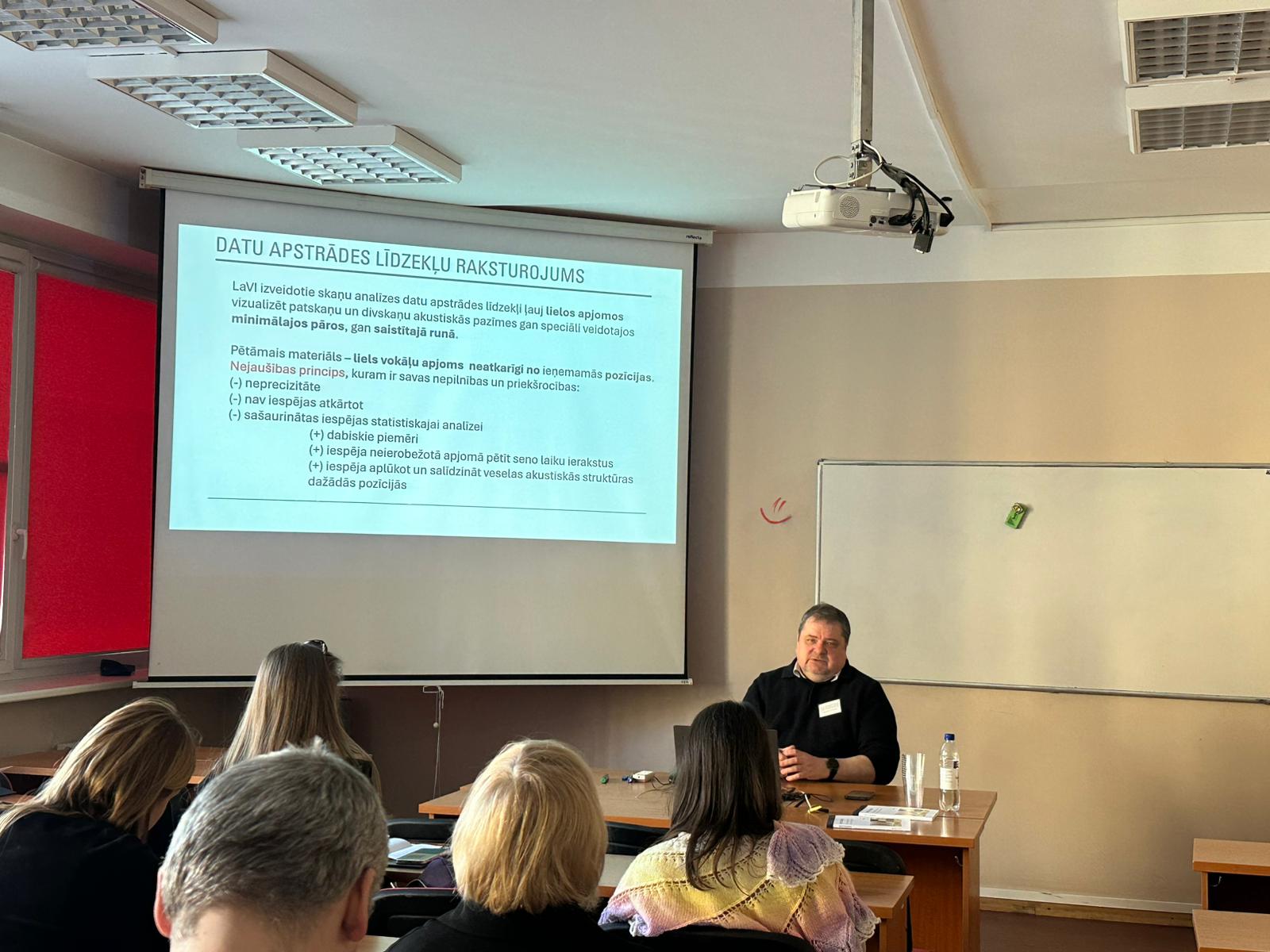
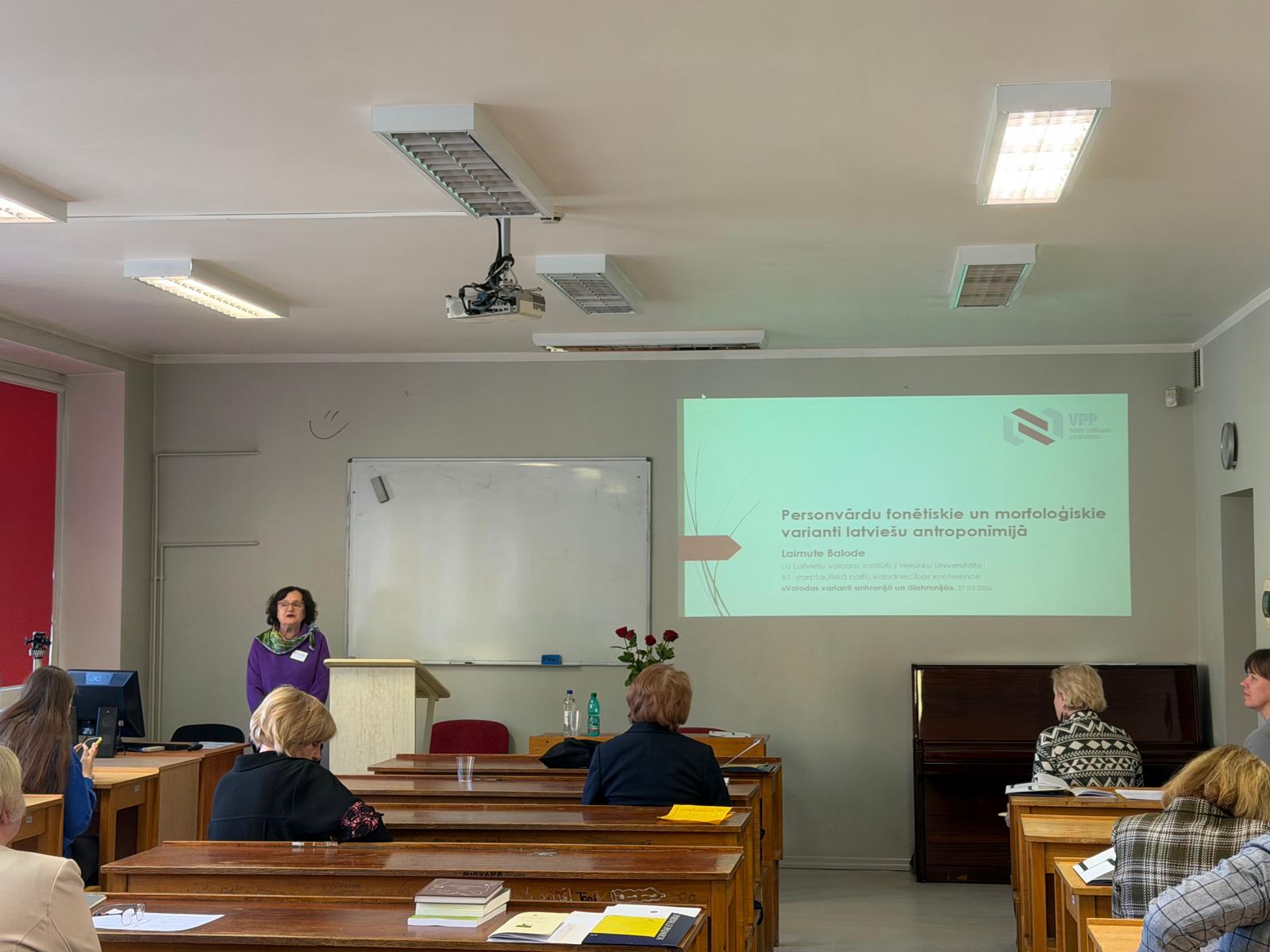
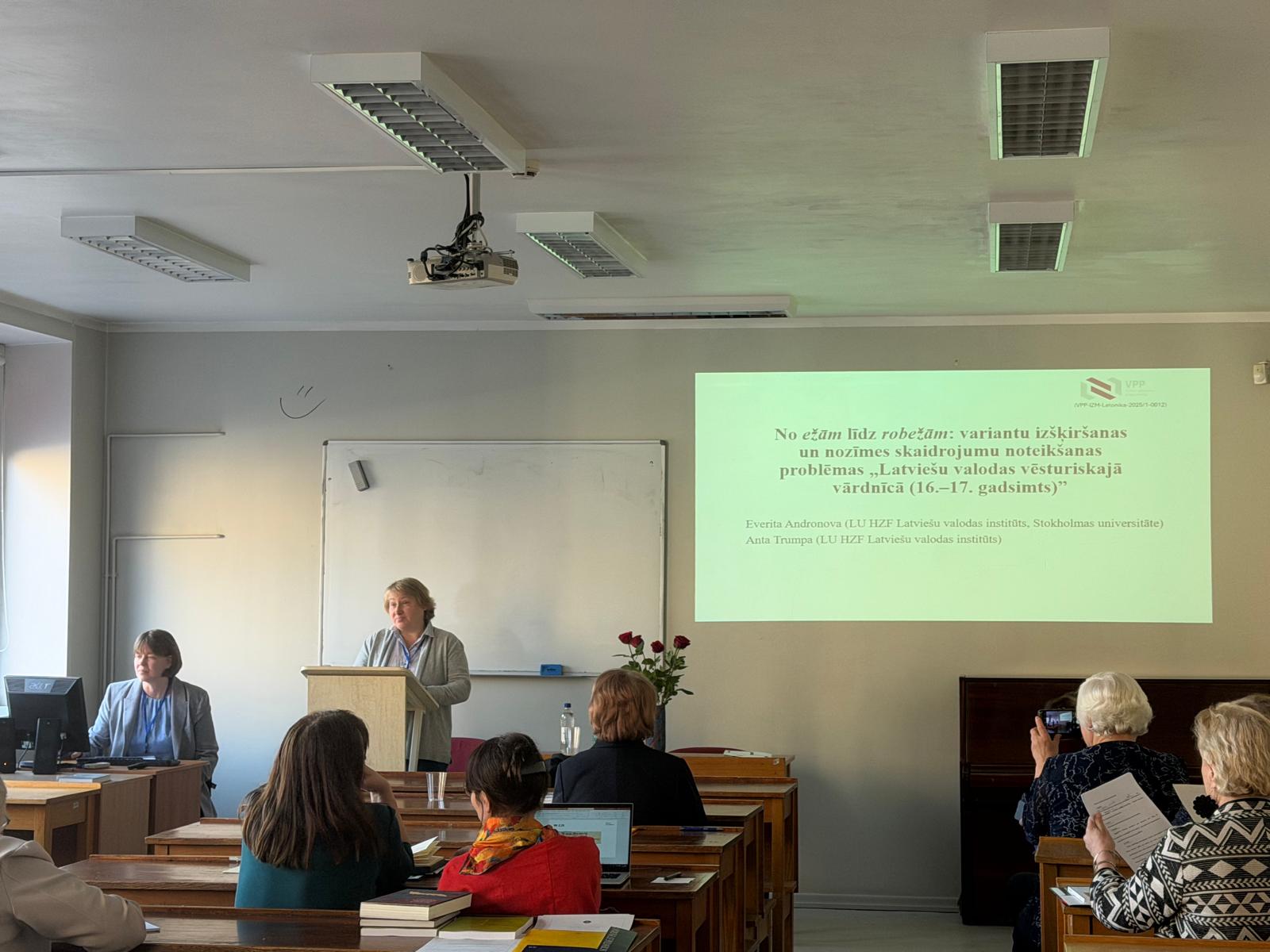
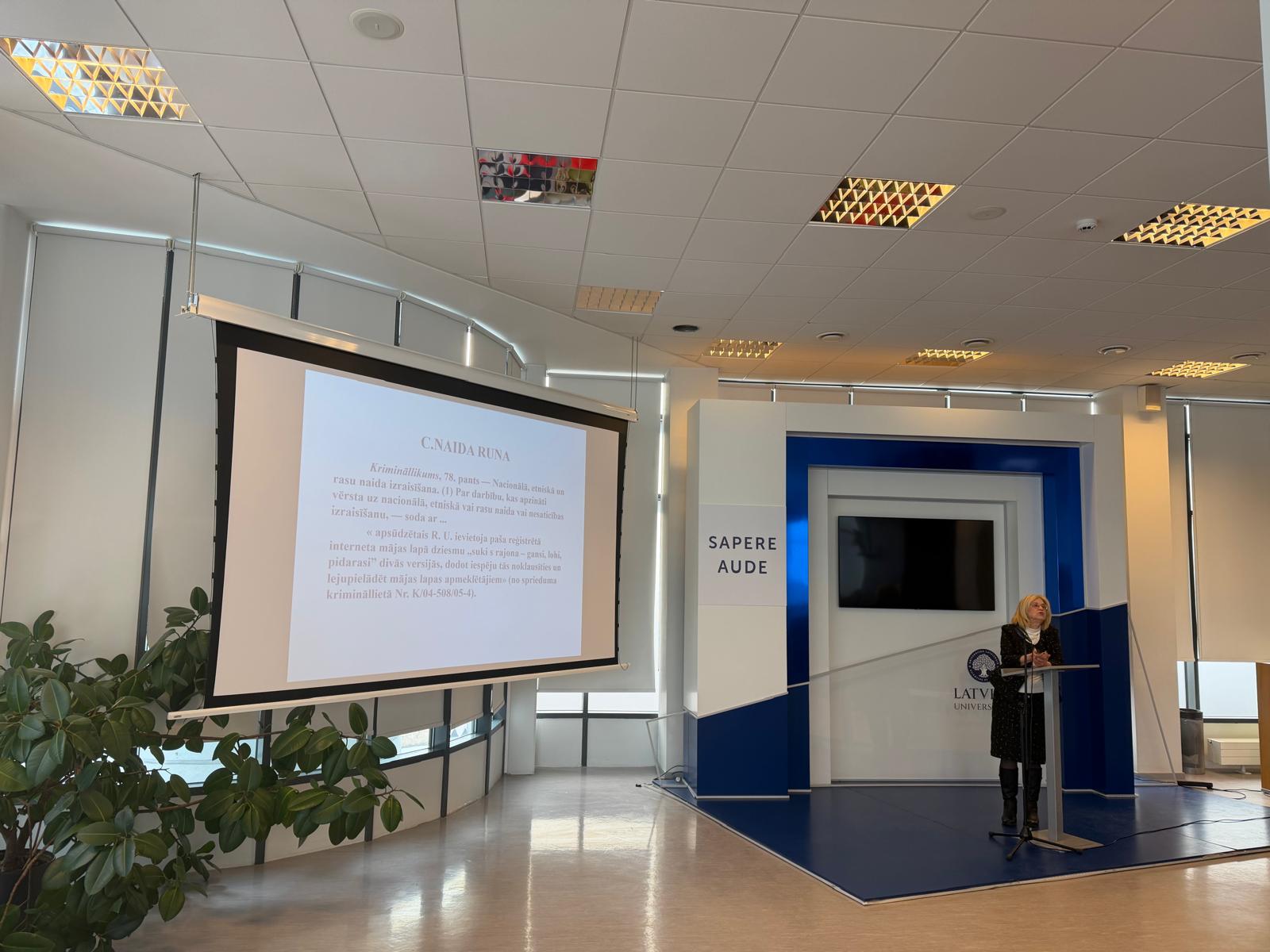
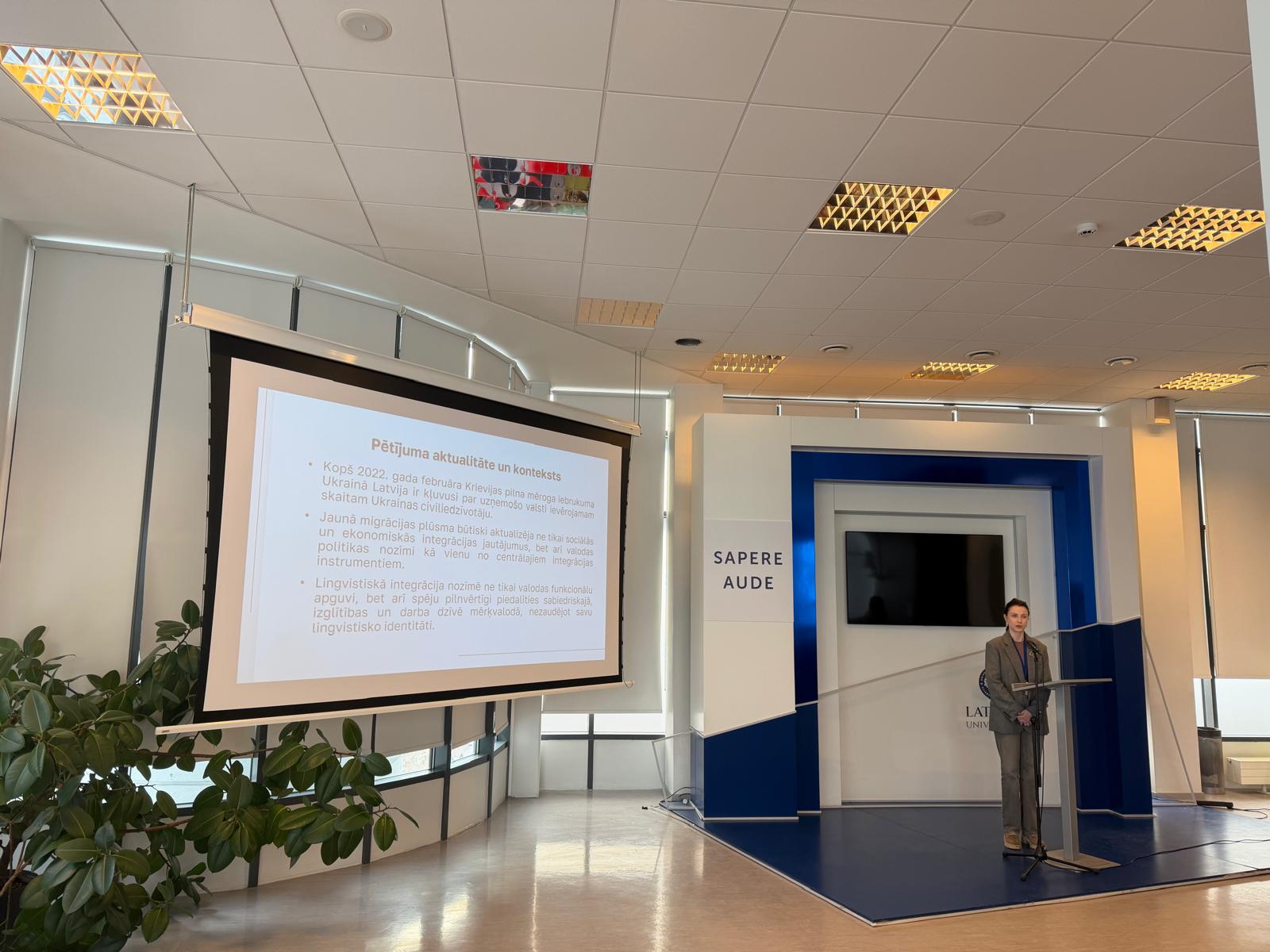
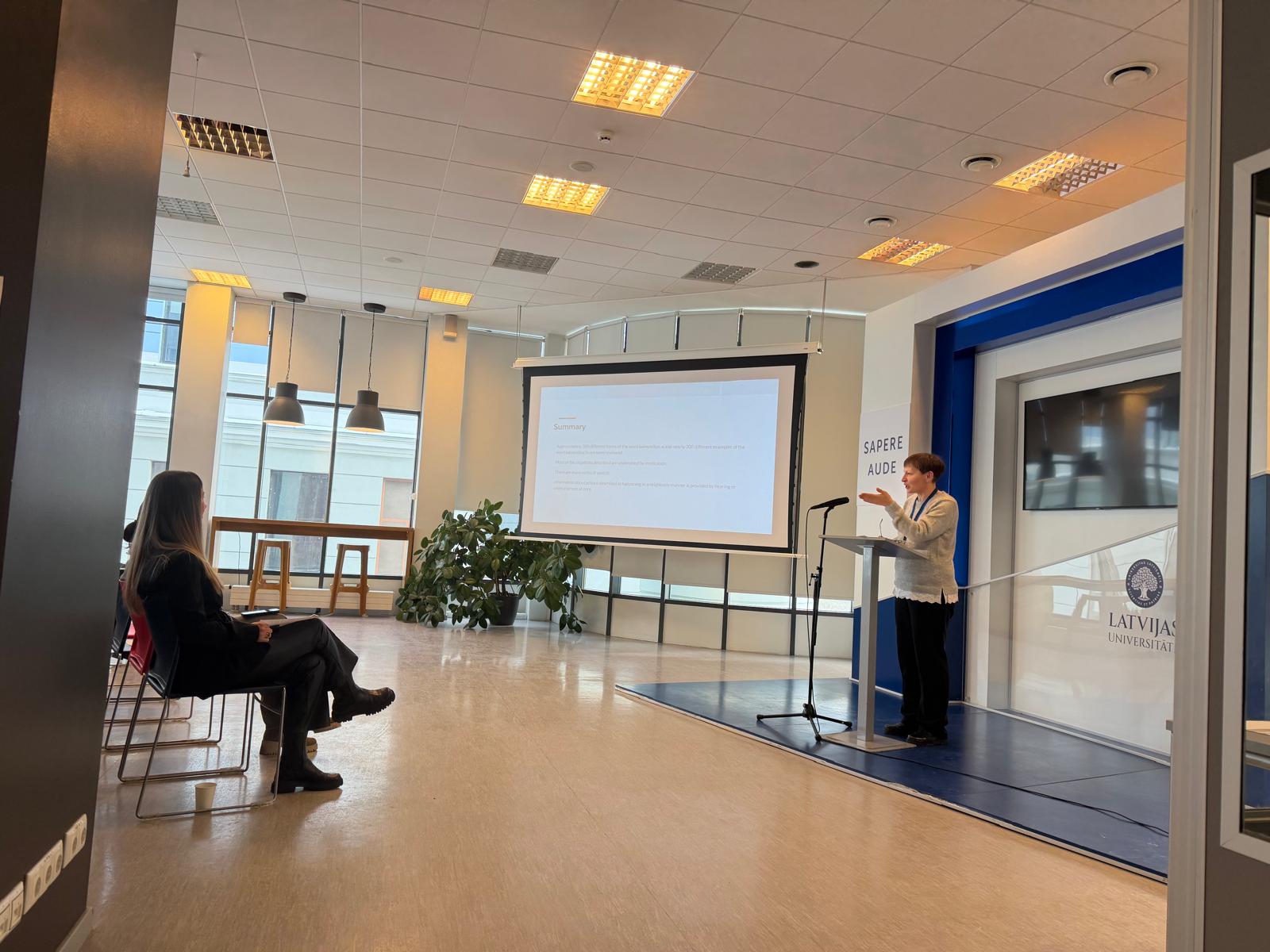
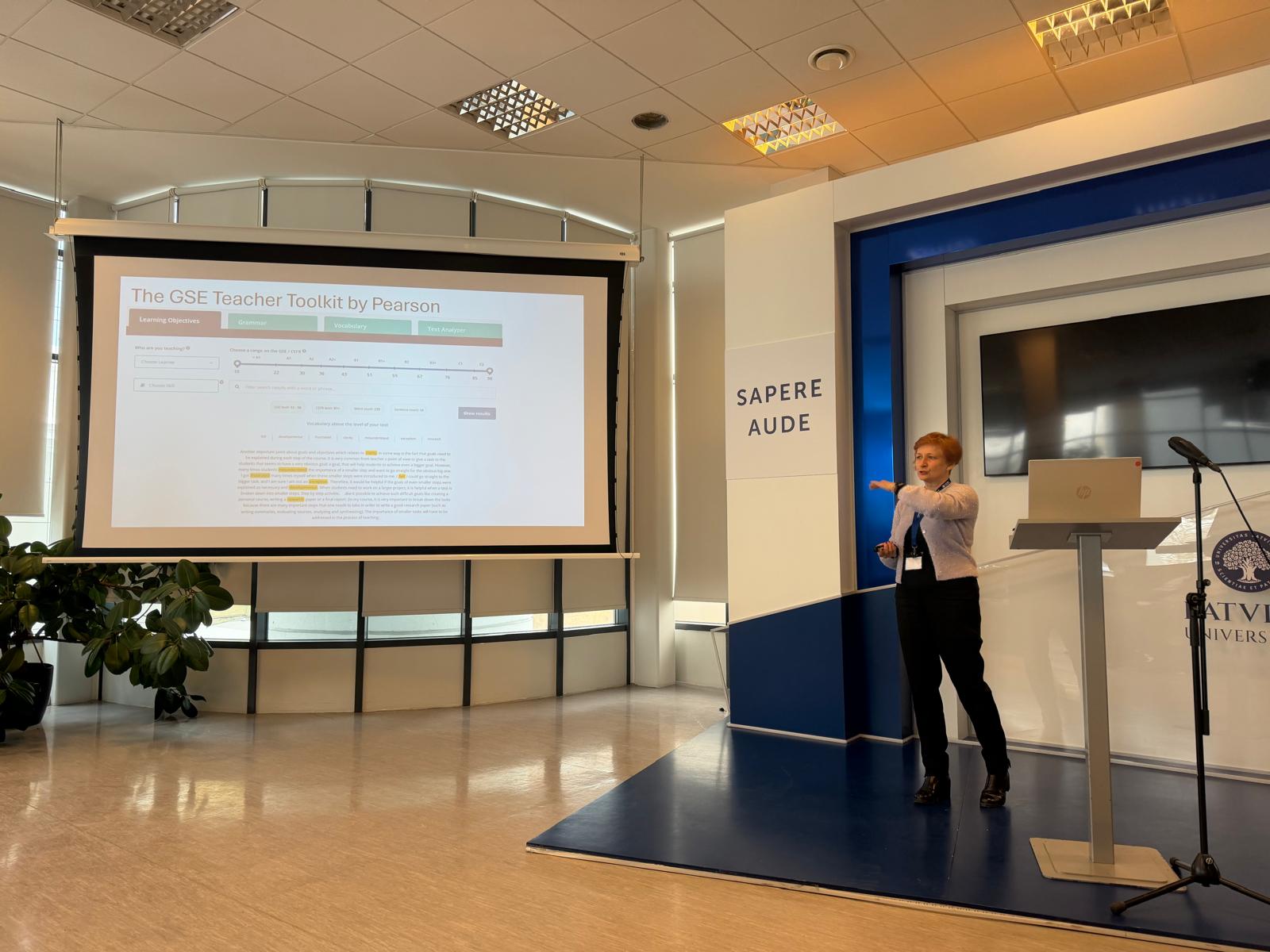
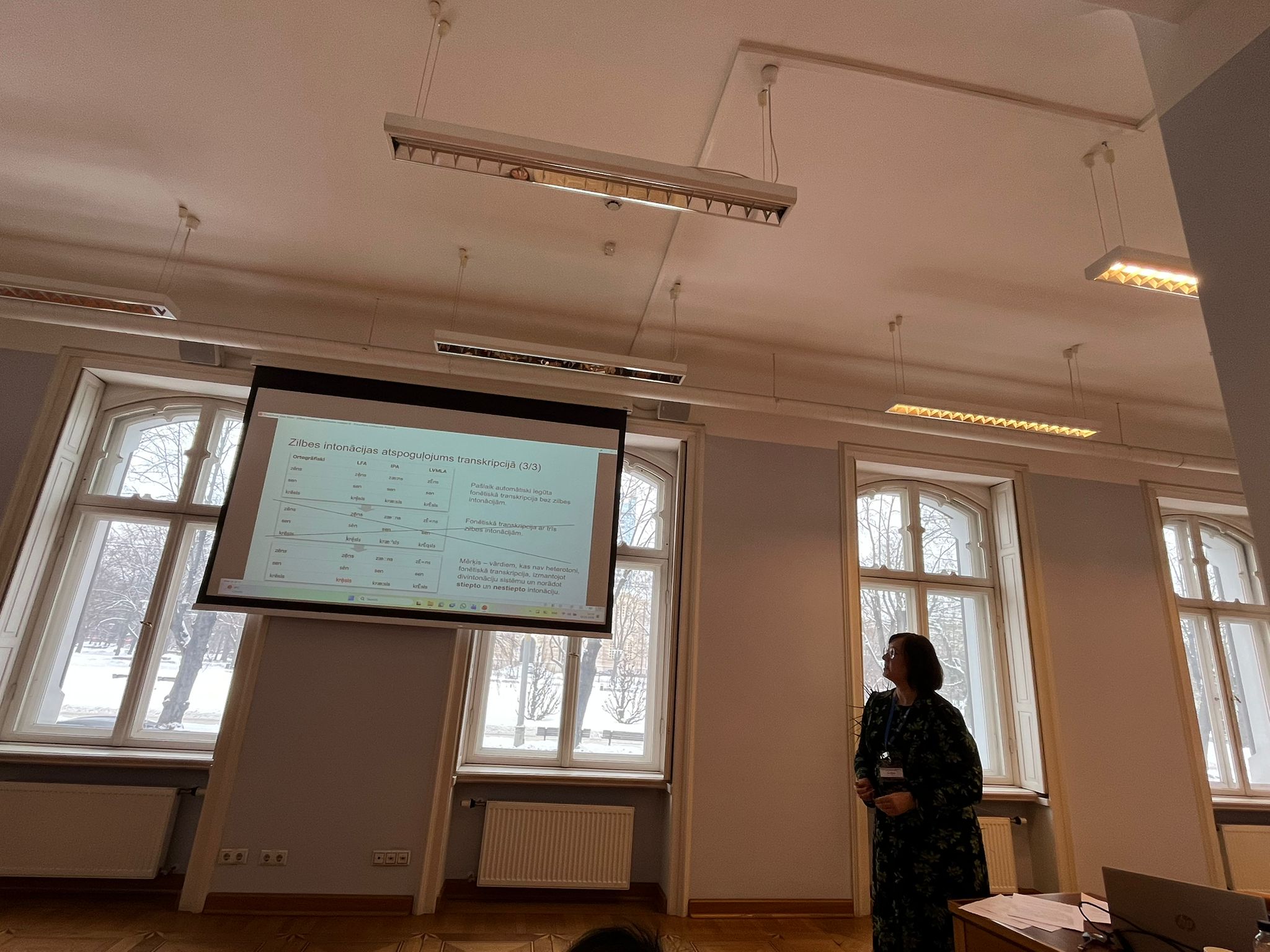
On 27 March 2026, representatives of the project “Latvian Language in Time, Space and Society (LaTS)” (No. VPP-LETONIKA-2025/1-0012) participated in the 61st International Conference on Baltic Linguistics, delivering presentations on issues of dialectology, onomastics, sociolinguistics, and the history of language.
In her paper “Phonetic and Morphological Variants of Personal Names in Latvian Anthroponymy”, Laimute Balode analysed the variation of personal names in Latvian, with particular attention to phonetic and morphological variation in given names. She emphasised the interaction of systemic, normative, and individual factors, demonstrating that such variants reflect both language development and social processes.
Ina Druviete in her presentation “Variationist Linguistics – an Alternative Approach to the Stratification of Language Varieties?” examined variationist linguistics as a branch of sociolinguistics and its relationship to the traditional classification of language varieties. She discussed its place in Latvian linguistics and concluded that it offers a more dynamic perspective on language structure and use, complementing the conventional model.
In her paper “Some Notes on Vowel Quality and Quantity in the Livonian Dialect of Courland Subdialects”, Anete Ozola focused on the properties of vowels in the Livonian dialect subdialects of Courland. She analysed both qualitative and quantitative aspects, highlighting the importance of dialects for understanding the Latvian language system and its historical development.
Anta Trumpa and Everita Andronova presented “From eža to robeža: Problems of Distinguishing Variants and Determining Meanings in the ‘Historical Dictionary of the Latvian Language’”, in which they analysed lexicographic challenges encountered in compiling a historical dictionary. They examined the forms and usage of the words eža and robeža in early sources, emphasising the complexity of distinguishing variants and interpreting meanings.
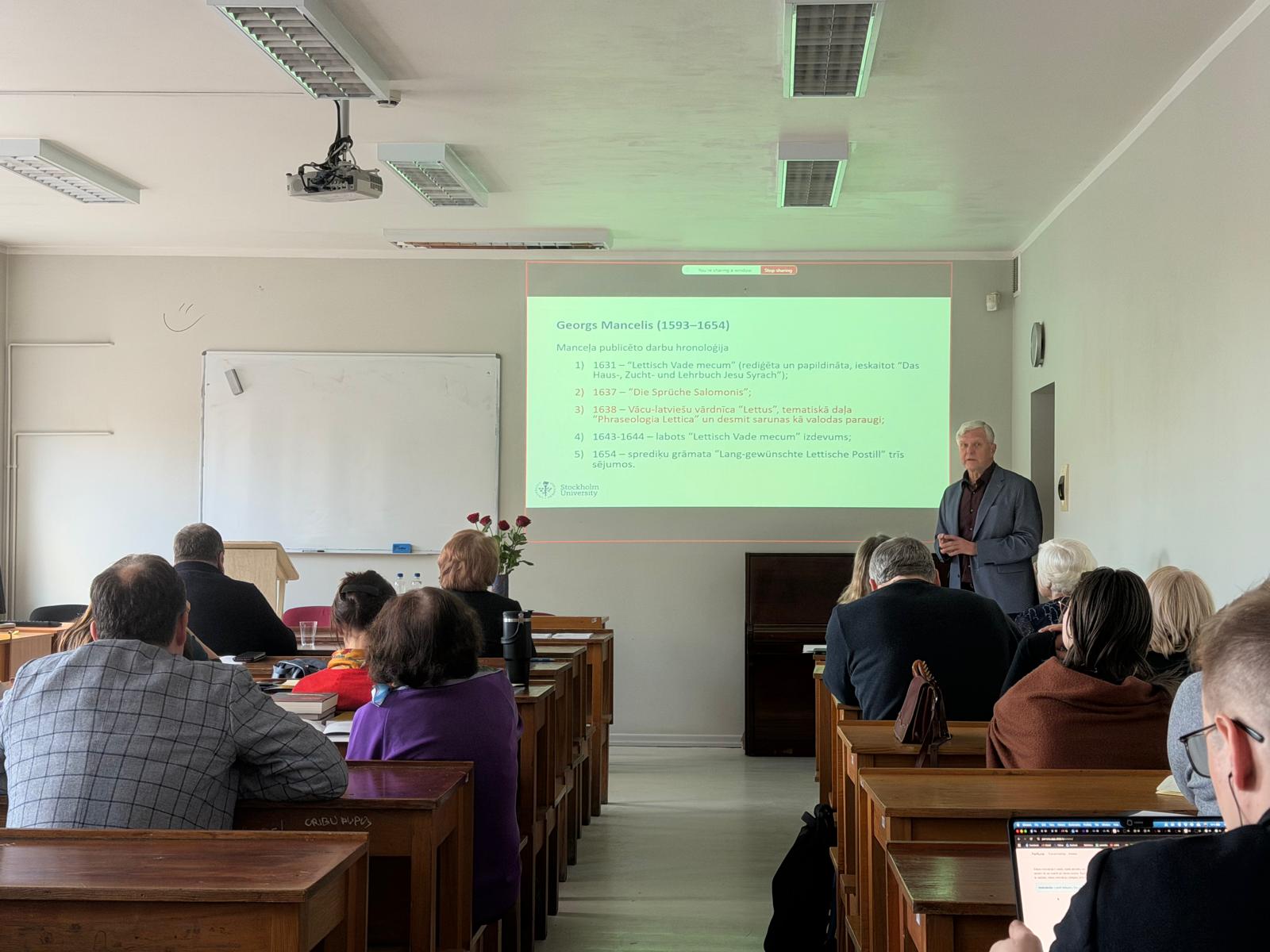
In his paper “Comments and Language Variants in Georg Mancelius’ Handbook ‘Lettus’ (1637–1638): Structure and Functions”, Pēteris Vanags analysed comments and language variants in early Latvian written tradition. He explored their structure and functions, shedding light on processes of language standardisation and interpretation in the 17th century.
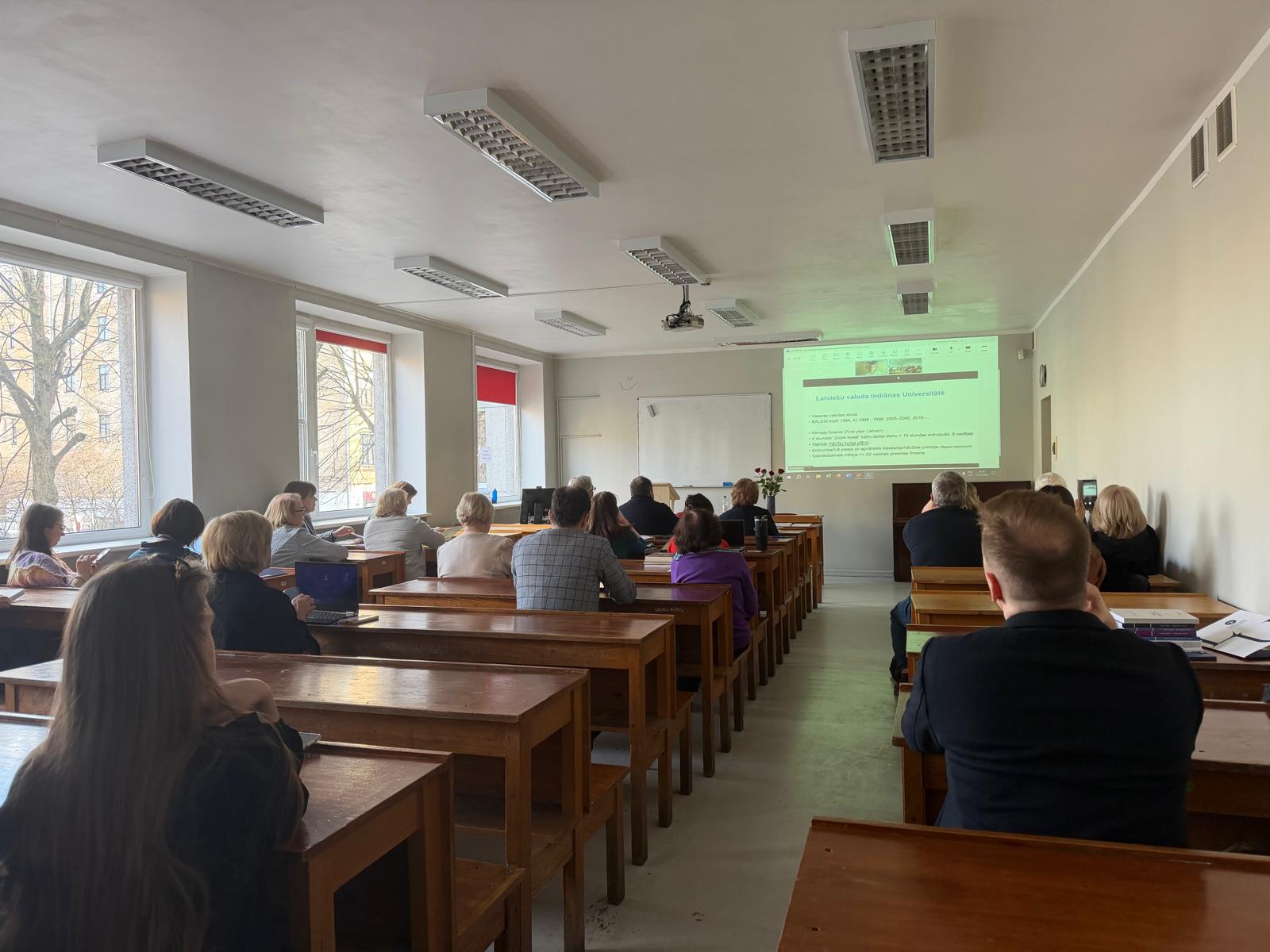
Solvita Burr presented the paper “‘We Are Not the Best Planners, but Somehow Christmas Happens’: The Oral Component of Intensive Latvian Language Course Exams as a Reference Point for Assessing Students’ Speaking Proficiency”. She analysed the spoken language of learners of Latvian within an intensive course. Based on students’ exam materials, she evaluated the development of speaking skills and communicative competence, highlighting both linguistic and personal dimensions.
More about the conference: here.
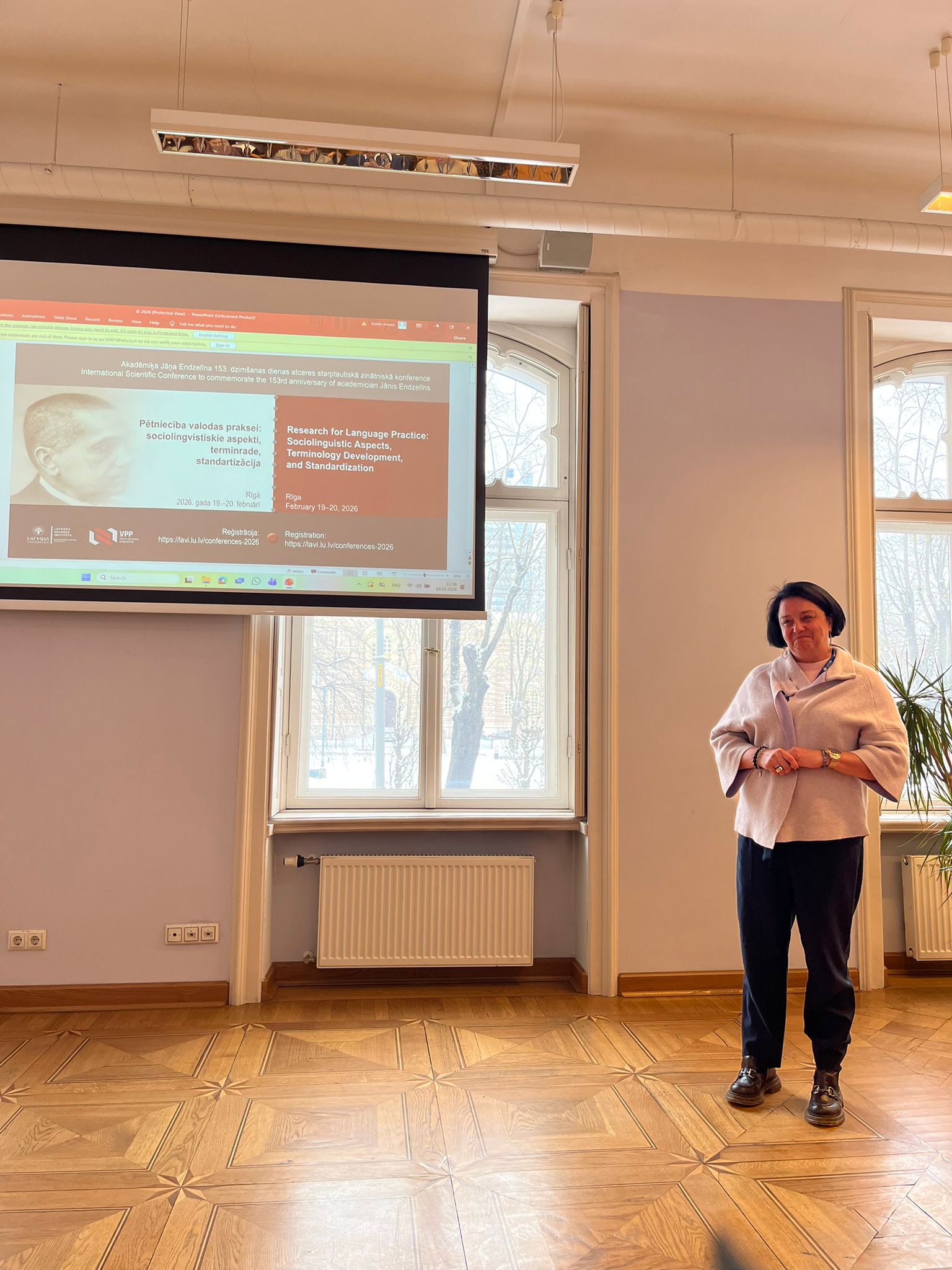
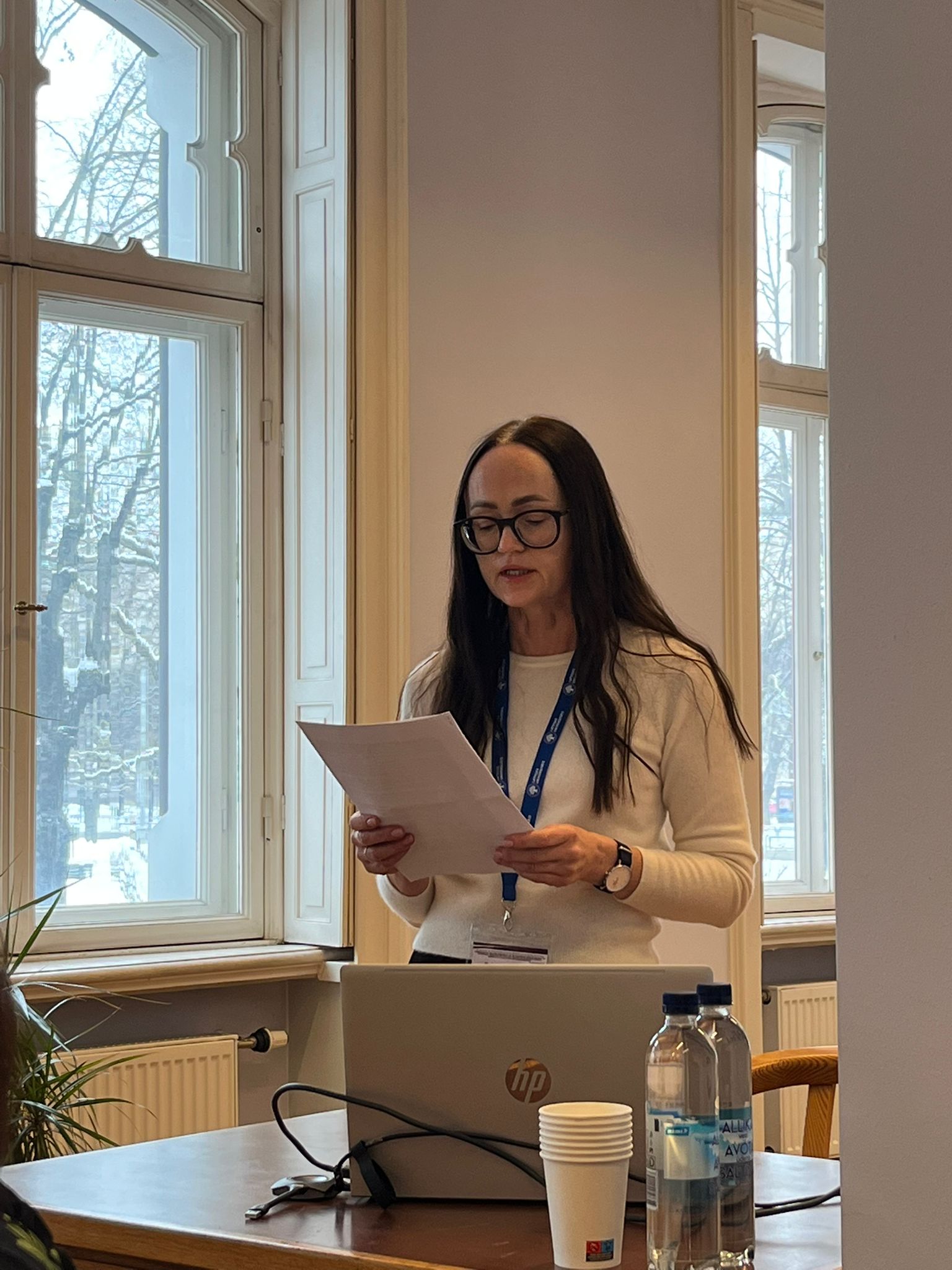
On 5 March 2026, the head of the LaTS project, Sanda Rapa, presented the project at the CLARIN and DARIAH conference “Digital Infrastructure for the Humanities.” In her presentation, she introduced each sub-project and addressed three key questions: why we conduct this research, what is being studied within the project, and what should be explored in the future. The presentation was attended not only by researchers but also by representatives of the Ministry of Education and Science.
The presentation emphasized that research on the Latvian language encompasses its historical development, regional and social diversity, and its functioning in a multilingual environment. The project is structured into six subprojects: sociolinguistics; terminology and translation studies; dialectology and the Latgalian written language; onomastics; the history of the Latvian language; and the acquisition of Latvian as a foreign language. Together, these areas cover the main directions of Latvian linguistic research.
The lecture also outlined the planned results of the project, including the preparation of monographs and dictionaries, studies of dialects and place names, sociolinguistic analyses, research on the development of terminology, and investigations into the acquisition of Latvian in Latvia, in the diaspora, and at foreign universities. Particular attention was also given to the importance of digital resources and future research directions, such as language data analysis, digital maps, and new tools for studying the Latvian language.
In conclusion, it was stressed that the project provides a broad foundation for understanding the development of the Latvian language and strengthens its role as a unifying element of Latvia’s culture, identity, and society.
Video overview of the first day of the conference. Prepared by Vija Požarnova.
Video overview of the second day of the conference. Prepared by Vija Požarnova
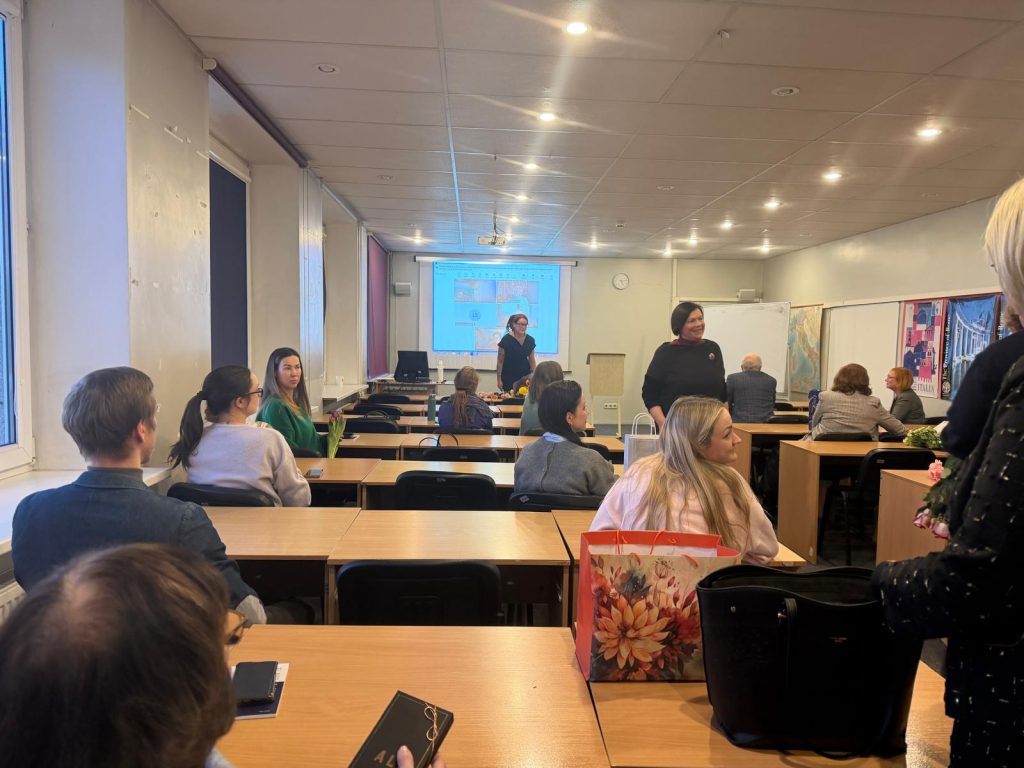
On 22 December 2025, the first management meeting of the LaTS project took place, focusing on issues related to the project launch, the planned outcomes, and the organisation of further work.
The meeting participants agreed on the key administrative steps required to initiate the project, including the streamlining of work organisation and the review of staff workloads in view of parallel commitments in other projects. The need to ensure clear and timely information flow between the sub-projects was emphasised.
Special attention was given to the results outlined in the project application and to the initial planning of how these results would be achieved. In particular, the preparation of scientific publications and the rational use of work resources were highlighted during the discussions.
The meeting also addressed the recommendations of the project’s external evaluators, with an emphasis on the interconnection of the sub-projects, technological aspects, dissemination of results, and the timely assessment of potential risks.
Finally, issues related to work mobility and participation in academic events were discussed, clarifying the general principles for linking project-related activities with the project’s results during the initial phase of the project.