On April 1, the project manager Renāte Siliņa-Piņķe and the lead researcher Sanda Rapa were guests on the radio program Zināmais nezināmajā (“The Known in the Unknown”), where they spoke about the project, its planned objectives, and what has already been accomplished in the previous phase. By providing examples, the researchers offered insight into the investigated origins and diachronic development of certain given names in Latvia, outlined the history of Latvian personal names, and explained how diverse the development and adaptation of foreign-origin given names can be in the Latvian language.
The recording of the programme is available on the website of Latvian Radio, while a description of the recording is available on the Latvian Public Media news website.

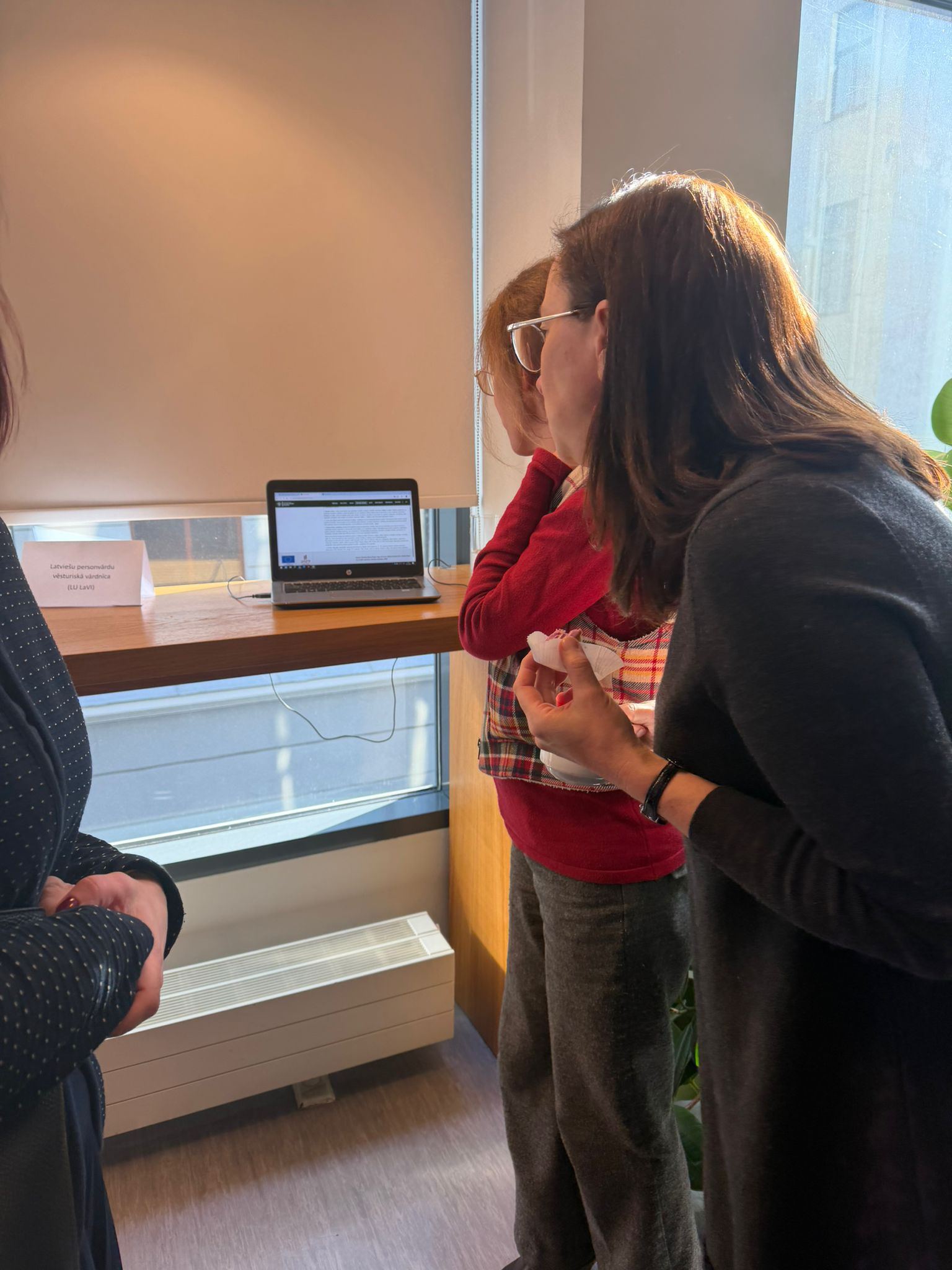
The authors of the Historical Dictionary of Latvian Given Names were invited to introduce their work to the participants and audience of the CLARIN conference Digital Infrastructure for Humanities. We presented the achievements of the project Historical dictionary of Latvian given names: digital approach and open data (LaGiN) and spoke about our plans for the next three years within the project Latvian Anthroponymic Desiderata: Diachronic research of unexplored Latvian given names for global integration and open access (LAnDe). We received both excellent feedback on the work accomplished and valuable suggestions for our future work.
On 23 January 2026, the project participants came together for their first online meeting. During the meeting, the project lead Renāte Siliņa-Piņķe outlined the project’s objectives and key deliverables, introduced the distribution of responsibilities, presented the upcoming tasks and their main contributors, and agreed on the format and schedule of future meetings.
Data collection, compilation, and systematisation activities had already been initiated in the first half of January.
Image: a slide from the project leader’s presentation at the general meeting.


Latvian Language Institute
of the University of Latvia
Kalpaka bulvāris 4
Rīga LV-1050
Latvia
☏ 371 67034016
Follow us
